
 0
0
 0
0
Criminal Justice on Camera in Texas Jails
0
0
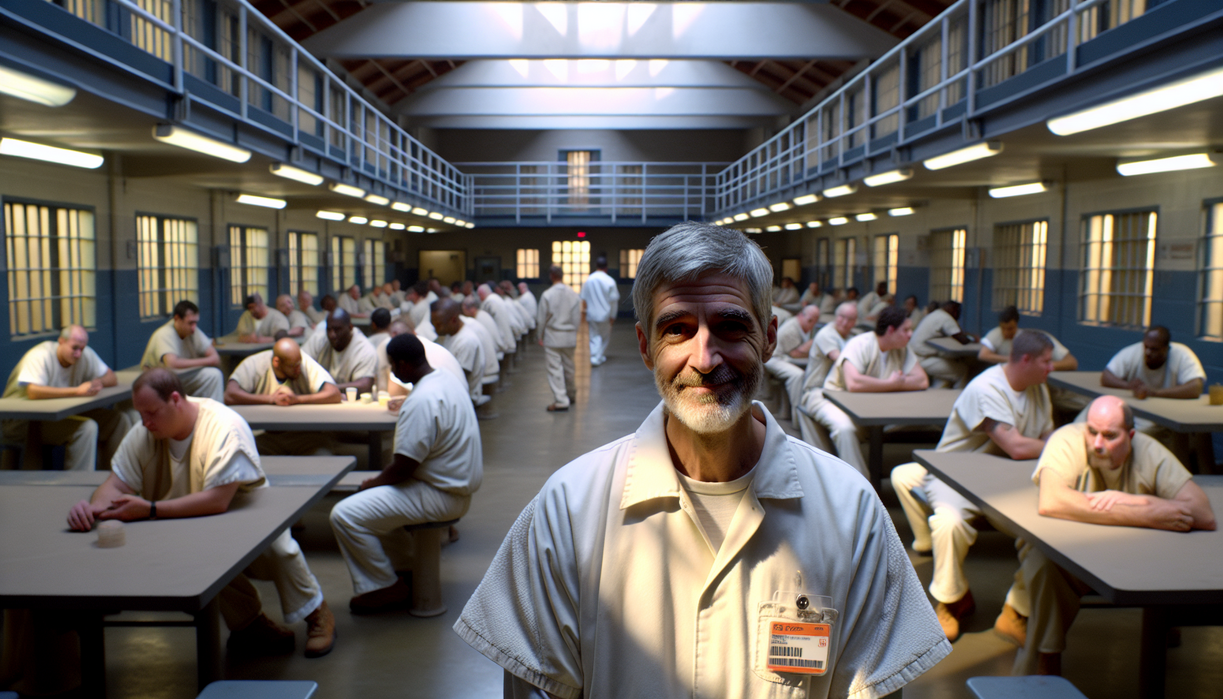
www.insiteatlanta.com – At 4:50 p.m. on May 25, 2024, a camera in Hutchins State Jail captured a scene that should unsettle anyone who cares about criminal justice. In a crowded dorm, 52-year-old Jackie Wiley moved through a space meant to punish but also to protect, to correct, and to return people to society alive. What the camera did not capture, however, were the quiet policy failures, neglected medical needs, and political choices that turned his confinement into a potential death sentence.
Texas promised that its state jail system would be different: short stays, treatment, education, and a more humane approach to low-level offenses. Instead, that promise has frayed under overcrowding, chronic understaffing, and rising deaths that reveal deeper fractures in criminal justice policy. Wiley’s story, glimpsed through a static lens in a noisy dorm, forces us to confront what happens when a system built to correct instead accelerates harm.
How Texas State Jails Broke Their Criminal Justice Promise
Texas created state jails in the 1990s as a reform-minded twist on incarceration. Lawmakers claimed these facilities would focus on rehabilitation, especially for people convicted of nonviolent offenses. Shorter sentences, targeted programs, education, and substance use treatment were supposed to define a new era in criminal justice. The idea gained political support because it sounded tough yet pragmatic: hold people accountable, reduce prison crowding, and lower recidivism through structured help.
Reality shifted quickly. Funding never matched the ambitions promoted on paper. Programs faded or shrank, educational offerings became spotty, and treatment beds lagged behind need. Instead of serving as hubs for rehabilitation, many state jails turned into warehouses for people nobody quite knew what to do with. A reform once hailed as visionary drifted into routine punishment, with far less oversight than the original sales pitch implied.
At the same time, Texas continued to rely heavily on criminal justice solutions for social problems like addiction, homelessness, and mental illness. State jails filled with people carrying complicated histories of trauma, poverty, and chronic illness. Yet the support structure inside those facilities remained thin. When you place medically fragile, vulnerable people in harsh environments with limited care, you do not merely confine them. You create conditions where preventable suffering and death become statistically inevitable.
The Human Cost Behind Rising Deaths
Each death in custody reflects a specific set of decisions: ignored symptoms, delayed transport, inadequate staffing, or outdated protocols. Rising death counts in Texas state jails expose how a criminal justice system can quietly normalize risk to human life. For someone like Jackie Wiley, age alone increased vulnerability. Midlife often brings chronic conditions that demand consistent medication, monitoring, and timely response when something changes. In cramped dorms, such needs often compete with security priorities or staff shortages.
From my perspective, the most disturbing element is not just the number of deaths, but how unremarkable they have become within bureaucracy. When mortality is treated as an unfortunate but accepted cost of doing business, the moral foundation of criminal justice erodes. Officials may cite complex causes—overdose, heart disease, suicide—but those explanations rarely lead to robust transformation. Instead, they become a script that converts tragedies into data points on an annual report.
We should resist that flattening. Behind every statistic is someone whose punishment exceeded the sentence handed down in court. Few judges intend to impose a potential death penalty for a low-level offense. Yet that is effectively what happens when health care is inconsistent, when emergencies go unanswered, or when incarcerated people fear retaliation for reporting symptoms. The human cost lies not only in lives lost but also in the fear that spreads among those who remain.
How Cameras Reveal and Conceal Criminal Justice Truths
The Hutchins State Jail camera that recorded Wiley’s final hours serves as both witness and shield. On one hand, video can expose neglect, provide timelines, and counter false narratives about what occurred. On the other, a fixed camera angle cannot capture whispered requests for help, medical histories, or staff decisions made off-screen. Our criminal justice system increasingly leans on surveillance to prove accountability, yet technology often obscures structural failures by reducing complex events to silent footage. When we treat video as the ultimate truth, we risk ignoring the policies, culture, and budget choices that shape what happens before and after the red recording light blinks on.
The Structural Flaws Deep Inside Texas Criminal Justice
To understand why deaths rise in state jails, we have to look beyond individual staff members toward systemic design. These facilities often operate with chronic vacancies among correctional officers, nurses, and mental health professionals. Fewer people supervise more residents, which magnifies every oversight. When one nurse covers multiple dorms, response times to medical crises stretch. When one officer watches dozens of people in a dorm, subtle signs of distress may go unnoticed until it is far too late.
Budget priorities make this worse. Legislators speak tough on crime yet hesitate to invest in basic care for those behind bars. In theory, criminal justice institutions should at least maintain the health of people under state control. In reality, cost-saving measures encourage minimal compliance instead of best practice. Aging buildings, limited clinic hours, and sparse specialist access create an environment where chronic conditions smolder until they explode into emergencies.
There is also a deeper design flaw: state jails function as a kind of limbo. Sentences are short, so extensive treatment or education programs are seen as poor investments. However, those short stays still represent months of someone’s life under state custody. When entire classes of people cycle quickly through neglected institutions, systemic risk multiplies. Rapid turnover can hide patterns of neglect because each individual leaves—alive or not—before oversight bodies fully grasp the trend.
Health Care, Neglect, and the Quiet Expansion of Punishment
Medical care inside carceral facilities often reflects the gap between constitutional minimums and ethical standards. Legally, states must avoid deliberate indifference to serious medical needs. Yet the threshold for proving indifference remains high, while the lived experience of many incarcerated people falls into a wide gray zone. Delayed appointments, skipped medications, or rushed triage may not always meet the legal definition of indifference, but from a human standpoint, they represent neglect.
Inadequate health care effectively lengthens punishment beyond judicial intent. A sentence measured in months can morph into years of worsening health or permanent disability caused by untreated illnesses. Criminal justice officials rarely acknowledge this hidden penalty, yet families witness it clearly when loved ones return home sicker, weaker, or not at all. For people already managing poverty, that additional burden can be devastating, pushing households deeper into crisis.
My own assessment is that we underestimate how much health policy and criminal justice policy overlap. When lawmakers underfund community clinics, mental health services, and addiction treatment, jails and prisons become default care providers. However, those institutions were never built for that role. The result is a patchwork of minimal services delivered in an environment of coercion. That mix breeds mistrust, so people sometimes hide symptoms, fearing isolation, discipline, or stigma. Silence, in turn, feeds preventable emergencies.
Why Texas Must Rethink Short Sentences and Carceral Logic
Short state jail sentences may appear moderate, yet they still expose individuals to concentrated risk without delivering meaningful support. If Texas continues to rely on confinement as a primary response to low-level offenses, the state must at least transform conditions so imprisonment does not quietly function as a health hazard. Better options exist: expanded diversion programs, community treatment, restorative approaches, and housing-focused interventions. The question is whether criminal justice policy will evolve beyond reflexive incarceration or remain anchored to a model that measures success in occupied beds rather than restored lives.
Repairing Trust and Reimagining Criminal Justice
No reform will matter unless communities trust that state custody will not become a death trap. Families of people held inside state jails often receive limited information when something goes wrong. Official statements emphasize ongoing investigations or unspecified medical issues. That opacity deepens suspicion, especially when prior complaints about conditions already circulated. A credible criminal justice system requires more than legal authority; it needs public confidence that truth will emerge, even when institutions fail.
Greater transparency could start with clear, accessible data on deaths, medical incidents, staffing levels, and grievance outcomes. Independent oversight bodies should have full access to facilities, records, and video footage. But transparency alone cannot substitute for accountability. When investigations identify negligence or policy violations, consequences must follow—both for individuals and for leadership responsible for chronic under-resourcing. Otherwise, inquiries become rituals that absorb outrage without altering outcomes.
From my viewpoint, the ultimate measure of criminal justice integrity is how it treats people who hold the least power. Incarcerated individuals have limited ability to choose doctors, seek second opinions, or escape dangerous environments. That vulnerability imposes a heightened duty of care on the state. If Texas cannot guarantee that people will leave state jails alive unless overt violence occurs, then the system conflicts with basic democratic values. Public safety cannot reasonably mean sacrificing the lives of those we detain.
From Camera Footage to Collective Responsibility
When we focus solely on shocking moments—like the final hours captured by a jail camera—we risk narrowing responsibility to whoever appears on-screen. A guard who misses signs of distress or a nurse who misjudges symptoms can become convenient villains. Yet broader patterns often reveal systemic pressures: too many people to supervise, outdated protocols, poor coordination with external hospitals, or leadership obsessed with cost control. Criminal justice failures begin long before any specific emergency unfolds.
That is why public debate should widen its lens. Instead of asking only whether staff followed policy, we must ask whether the policy itself makes harm likely. For example, does the facility routinely ignore prior complaints about medical care? Are people punished for seeking help, perhaps through loss of privileges or placement in segregation? If so, the recorded crisis is the visible tip of an iceberg built from years of misaligned incentives.
Personally, I believe we need to treat every in-custody death as a community event, not a private tragedy behind walls. Civic leaders, faith groups, advocates, and families should have structured ways to participate in reviews and reforms. When the public remains distant, the institutions that act in its name drift toward insularity and self-protection. Criminal justice belongs to all of us, because it reflects our collective answer to violence, harm, and social breakdown. If we accept preventable deaths as routine, we have, in effect, rewritten that answer.
A Reflective Conclusion on Life, Punishment, and Reform
Standing back from the Hutchins camera’s frozen frame, we confront a simple yet demanding question: what, exactly, do we believe punishment should allow? If confinement for a low-level offense exposes someone like Jackie Wiley to lethal risk, then our criminal justice system has crossed an ethical line, regardless of legal justifications. Texas built state jails on a promise of shorter, smarter penalties, but follow-through faltered. Repairing that breach requires more than incremental tweaks; it demands a shift from warehousing people to honoring their inherent dignity. Until policy, budgets, oversight, and culture align with that principle, each new death will echo the same broken promise—and remind us that silence, too, is a form of participation.


Related Posts
 0
0
0
0
Hidden Flights and the Power of Content Context
 0
0
0
0